The United National Independence Party — architect of Zambian sovereignty, champion of African liberation, and bearer of the Humanist flame since 1959.
UNIP transformed Northern Rhodesia into the Republic of Zambia and became the conscience of Southern African liberation.
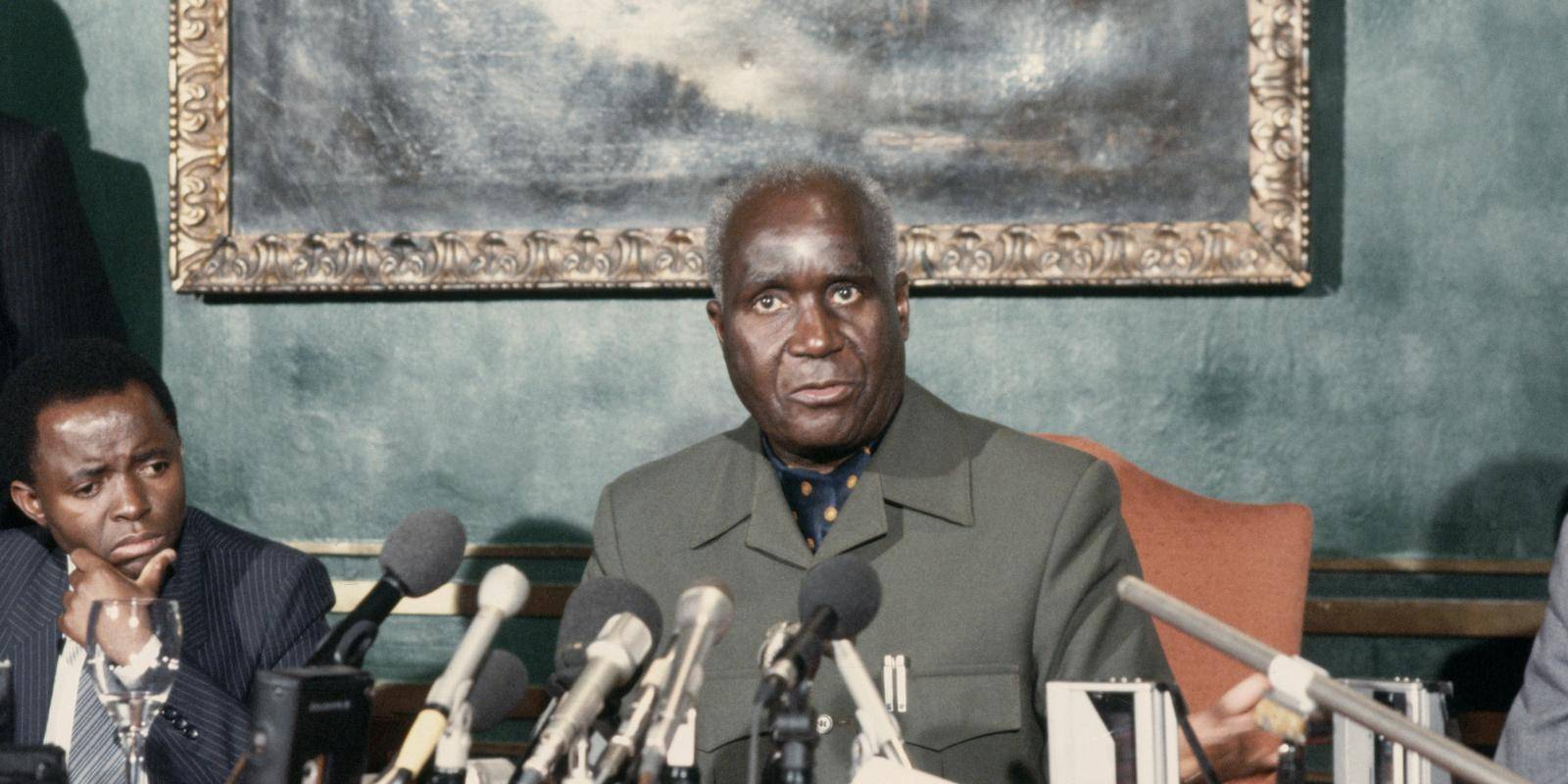
Led Zambia to independence from British colonial rule on 24 October 1964, with Kenneth Kaunda as the nation's founding father and first president.
Pioneered the philosophy of Zambian Humanism — rooting governance in African communal values, mutual aid, trust, and social justice for all citizens.
Lusaka became the headquarters for ANC, SWAPO, ZAPU, FRELIMO and MPLA — making Zambia the nerve centre of Southern African decolonisation.
Built the University of Zambia (1966), expanded schools nationwide, and ensured all children received free exercise books, pens and pencils.
The 1968 Mulungushi Reforms brought copper mines and key industries under national control, delivering resource sovereignty to the Zambian people.
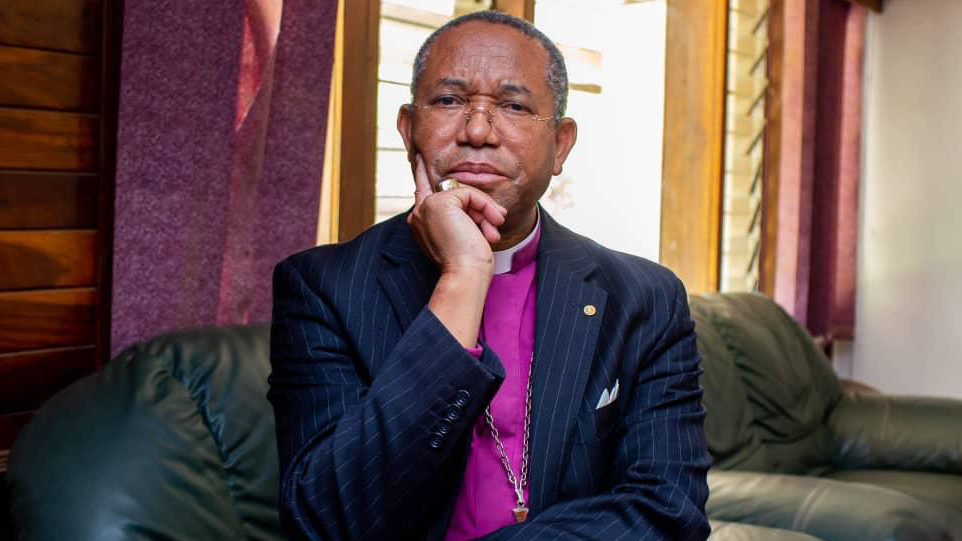
In 2021 Bishop Trevor Mwamba was elected UNIP President — the first non-Kaunda leader in 60 years — endorsed by KK himself for the party's revival.
From underground resistance to the halls of power — and the road to renewal.
Kenneth Kaunda breaks from the African National Congress and founds the Zambian African National Congress (ZANC) as a more militant anti-colonial movement. He is arrested and jailed.
With Kaunda imprisoned, Mainza Chona founds the United National Independence Party (UNIP) as successor to the banned ZANC. Kaunda assumes leadership upon release in January 1960.
UNIP wins 55 of 75 seats in the pre-independence elections. Northern Rhodesia becomes the Republic of Zambia. Kenneth Kaunda is sworn in as the first President.
UNIZ opens in Lusaka, built with grassroots public contributions. Kaunda becomes its first Chancellor, cementing the party's commitment to transforming higher education.
Kaunda nationalises foreign-owned copper mines and key industries through the Mulungushi Reforms under the Industrial Development Corporation — a defining act of economic sovereignty.
Following tribal and inter-party violence, UNIP is enshrined as the sole legal party in a new constitution. Kaunda governs under "one-party participatory democracy" until 1991.
Multi-party democracy returns. UNIP loses to Frederick Chiluba's Movement for Multi-Party Democracy (MMD). Kaunda's graceful concession becomes a model for peaceful transitions.
Kenneth Kaunda's son Tilyenji leads UNIP for two decades, maintaining the family legacy. UNIP contests elections in alliances but fails to recapture former dominance.
Bishop Trevor Mwamba defeats Tilyenji Kaunda at UNIP's congress — the first non-Kaunda UNIP leader since the 1960s. Kenneth Kaunda himself endorses the change, calling it necessary for survival.
Under Bishop Mwamba's leadership, UNIP prepares for the 2026 general elections. A UNIP party congress will determine the presidential nominee ahead of polling day.
"The challenge is to build a society in which all persons have equal rights and opportunities — regardless of race, tribe, sex or social origin."
— Kenneth Kaunda, First President of ZambiaThe guiding ideology that translated African communal values into national policy — from copper mines to village clinics.
Every person possesses inherent worth irrespective of wealth, tribe or status. The state exists to serve the individual, not the reverse.
Drawing on traditional African values of mutual aid and community loyalty — "I am because we are" — policies prioritised collective welfare.
State control of key industries (copper, banking) ensured mineral wealth served ordinary Zambians, not foreign shareholders.
Free education, universal healthcare access and cooperative farming programmes were rights, not privileges, under Humanist governance.
Humanism extended beyond Zambia's borders — recognising freedom as indivisible and providing material support to liberation movements across the continent.
Kaunda's Christian faith informed Humanism's ethical core — non-violence, sacrifice, and moral leadership were central to the ideology's character.
Interactive map of clinics, schools and cooperatives built under UNIP's Humanist governance. Click any marker for details.
"In Zambia, man is the centre of all activities. Policies and programmes exist to serve man, not man to serve policies."
— Kenneth Kaunda, Humanism in Zambia, Part I (1967)Kaunda's bold declaration — "Lusaka will support liberation movements" — turned Zambia into the operational backbone of African decolonisation.
When Zambia achieved independence in 1964, Kenneth Kaunda made an unwavering commitment: Lusaka would serve as headquarters and safe haven for every liberation movement fighting for black majority rule in Southern Africa. This was not merely moral solidarity — it was a strategic and dangerous choice that exposed Zambia to military retaliation from Rhodesia, apartheid South Africa and colonial Portugal.
Guided by Pan-Africanism, the OAU Charter, and the 1960 UN Declaration on Decolonisation, UNIP formalised support through institutional policy — hosting liberation movements, providing logistics, communications via Radio Zambia (broadcasting 40+ hours per week in 22 languages), and diplomatic cover through the front-line states network.
Zambia's copper revenues funded much of this solidarity. The economic cost was significant — sanctions, sabotage of infrastructure, and Rhodesian military raids — yet Kaunda never wavered, famously weeping as he announced each act of white minority repression in the region.
"The liberation of Southern Africa is not a luxury — it is a necessity for Zambia's own freedom and dignity."
— Kenneth KaundaZambia's role as the nerve centre of Southern African decolonisation. Click markers to explore liberation movement offices, training camps, and key corridors.
Lusaka served as ANC's primary external headquarters throughout the apartheid era. The party's National Executive Committee operated from Zambia. Oliver Tambo led the ANC in exile from Lusaka for decades.
SWAPO established key operational bases in Zambia, conducting the armed liberation struggle against South African occupation of South West Africa (now Namibia). Sam Nujoma coordinated from Lusaka.
Joshua Nkomo's ZAPU established headquarters in Lusaka following UDI (Rhodesian Unilateral Declaration of Independence) in 1965. Zambia provided logistics for ZAPU's armed wing, ZIPRA.
ZANU, led by Herbert Chitepo (assassinated in Lusaka in 1975), also received Zambian hospitality. The party's armed wing ZANLA conducted operations across the Zambian border corridor.
Samora Machel's FRELIMO received Zambian support in its war against Portuguese colonial rule. Zambia provided a transit corridor for fighters and logistics from Tanzania into Mozambique.
The MPLA operated through networks supported by Zambia and Tanzania. Kaunda navigated complex relationships with Angola's competing liberation movements, ultimately maintaining principled non-alignment between MPLA, FNLA and UNITA.
Independence enables UNIP to formalise support for liberation movements. Kaunda invites movements to establish offices in Lusaka.
Ian Smith's Unilateral Declaration of Independence hardens Zambia's commitment. Zambia closes its border, absorbs massive economic shock, and doubles support for ZAPU.
FRELIMO and MPLA achieve independence. Zambia's support corridor is vindicated. Lusaka now borders liberated territory to the east.
Robert Mugabe's ZANU-PF wins elections in independent Zimbabwe. Kaunda's patient support of Zimbabwean liberation over 15 years delivers a sovereign neighbour.
SWAPO's Sam Nujoma becomes first president of an independent Namibia. Zambia's decades of hosting SWAPO is vindicated in full.
Nelson Mandela becomes South Africa's first democratic president. Kaunda, Zambia and UNIP are honoured as indispensable architects of the final liberation in the region.
Theologian, lawyer, diplomat, and now statesman — the man tasked with reinventing Africa's original independence party.
Born in Mansa, Zambia on 7 May 1958, Bishop Trevor Mwamba is a man of extraordinary range. Lawyer, Anglican bishop, banker, diplomat, peacemaker, published author — and now the president of the United National Independence Party, tasked with restoring UNIP to national relevance for the first time in three decades.
His election on 4 April 2021 was historic: the first UNIP leader outside the Kaunda family since the 1960s. Kenneth Kaunda himself endorsed Mwamba, acknowledging that UNIP's survival required bold, independent renewal. "This is where God has appointed me," Mwamba declared after his victory — bringing to politics the same sense of divine calling that shaped his decades of ministry.
University of Zambia, 1981. Mwamba's first degree — laying a foundation in legal reasoning that would serve him in banking, church governance and politics.
UNZA · 1981University of Oxford, 1983. First-class grounding in theology and biblical studies, initiating a lifelong Oxford connection.
Oxford · 1983University of Oxford, 1984 and 1988 respectively. Deep engagement with systematic theology and church history.
Oxford · 1984–1988University of Oxford, 1998. Interdisciplinary mastery linking religion, society and culture — informing his later diplomatic and civic roles.
Oxford · 1998Yale University, 2009. Recognition of extraordinary contribution to theology, interfaith dialogue and public service.
Yale University · 2009His first professional posting immediately after graduating in law from UNZA.
Ordained deacon at Petertide 1984 by Bishop Mark Santer (Kensington) and priest in 1985. Served as Parish Priest at St George's, Luanshya, Zambia.
Served across Botswana, Malawi, Zambia and Zimbabwe as the Church of the Province of Central Africa's Provincial Secretary. Became the first Provincial Canon in 1991 by Episcopal Synod.
Simultaneously served as Head of Legal & Compliance, Head of Corporate Affairs, and Company Secretary. Managed board meetings, regulatory relationships, and the bank's Botswana Stock Exchange listing.
Consecrated on 6 February 2005 at Gaborone. Led the Anglican Diocese of Botswana for 8 years — presiding at state occasions, chairing the Africa-wide All Africa Anglican-Lutheran Commission, and serving on the UN Civil Society Advisory Committee.
Served the Church of England and was awarded the Honorary Freedom of the London Borough of Barking and Dagenham — the highest civic honour the borough awards.
Elected 4 April 2021, defeating Tilyenji Kaunda. Stood as UNIP's presidential candidate in the August 2021 general elections. Currently leading UNIP's revival ahead of the 2026 elections.
Bishop Mwamba's church career spans four decades across three continents. From a Curate in Notting Hill to Bishop of Botswana to the Anglican Diocese in Europe, he has served at every level of the Anglican Communion.
He was a key participant in the 2008 Lambeth Conference, served as official liaison for the All Africa Conference of Churches to the Southern Africa Development Community Parliamentary Forum, and mediated conflicts for the Province of Central Africa.
His tenure as Bishop of Botswana coincided with one of the most challenging periods of the HIV/AIDS epidemic — he mobilised the church as a frontline community health actor, serving on the Community Advisory Board of the Botswana Baylor Children's Clinical Centre of Excellence.
Ordained deacon 1984 and priest 1985 by Bishop Mark Santer at St Luke's, Chelsea.
Consecrated Bishop of Botswana on 6 February 2005, Gaborone.
Led the Church of the Province covering Botswana, Malawi, Zambia and Zimbabwe.
Facilitator at the 2008 Lambeth Conference. Coordinated amendments to the Council of Anglican Provinces in Africa's constitution.
Bishop Mwamba entered politics not as a career move, but as a calling. When approached to stand for the UNIP presidency in 2021, he framed it in the same language as his ministry: service to people. "The calling is the same — it's about people, it's about trying to improve the livelihood and welfare of our people."
His victory over Tilyenji Kaunda — son of UNIP's founding father — was historic. Kenneth Kaunda endorsed him, acknowledging that for UNIP to survive the modern era, it needed to break the dynastic hold of the Kaunda family and chart a new course.
In the August 2021 presidential elections, Mwamba stood on the UNIP ticket — finishing respectably, his campaign focused on restoring the moral clarity of Humanism to Zambia's governance. Looking ahead to 2026, Mwamba has confirmed that UNIP's constitution requires a party congress before elections, where delegates will determine the party's direction and candidate.
His political platform draws on UNIP's foundational principles: Humanism, Pan-African solidarity, economic sovereignty, and ethical public service — repackaged for the challenges of 21st century governance.
"Even while I was away from Zambia, I was very much a Zambian. When God called me back to serve, I answered — as a bishop answers a calling to serve the people."
— Bishop Trevor Mwamba
Published by Maclean Dubois (2006), reprinted by SPCK (2007). Mwamba's celebrated collection bridging African spirituality, scripture and contemporary life.
"Blessing or Curse; The African Experience." Published in Modern Believing Church and Society, Vol. 50:2. Addresses sexuality debates within global Anglicanism from an African perspective.
Journal of Anglican Studies 7:229–242 (Cambridge University Press). Links the 2008 Lambeth Conference outcomes to the Millennium Development Goals through an African lens.
"Living Expressions and Channels of Co-Operation." Published in the African Human Rights Law Journal, Vol. 14, No. 1. Examines the intersection of legal systems and religious practice across the continent.
Published at LSE. A measured, scholarly contribution to one of the most divisive debates in contemporary Anglicanism, offering African pastoral experience as a bridge.
Published during the pandemic, this reflection applies theological and moral reasoning to the global COVID-19 crisis — exploring solidarity, inequality and shared human vulnerability.
Film & Media: Bishop Mwamba appeared as himself in the HBO/BBC miniseries The No. 1 Ladies' Detective Agency (directed by Anthony Minghella), and is featured in seven books of Alexander McCall Smith's bestselling series.
What UNIP built endures. What UNIP stands for is being reclaimed for a new generation of Zambians.
Founded 1966 — built with grassroots national contributions. Kaunda served as first Chancellor.
Zambia's flagship public hospital, built under UNIP to provide world-class tertiary care.
Mulungushi Reforms 1968 — copper revenues directed to national development for the first time.
Broadcasting 40+ hours/week in 22 languages — voice of liberation movements across Southern Africa.
Under UNIP Lusaka became the recognised nerve centre of Southern African liberation — a distinction acknowledged by historians worldwide.
Under Bishop Mwamba, UNIP is reconnecting with its founding values — not as nostalgia, but as a living framework for 21st century governance. The 2026 general elections represent UNIP's most significant electoral test in a generation.
Restore checks and balances. UNIP advocates for genuine separation of powers and anti-corruption architecture.
Ensure Zambia's mineral wealth — copper, cobalt, emeralds — serves Zambian people as it did under the Mulungushi vision.
Revive the Humanist social contract: equitable access to education, healthcare and economic opportunity for all Zambians.
Champion Zambia's leadership in SADC, the AU, and AfCFTA — carrying forward KK's legacy of Pan-African engagement.
"UNIP does not belong to any family. It belongs to the people of Zambia — and it is to the people of Zambia that it must return."
— Bishop Trevor Mwamba, UNIP President, 2021